|
Title
Abstract
CV
Back
|
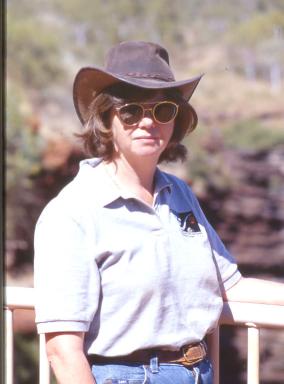
Staring KNGMG/NGMSO
symposium Dr. mrs. F.
Westall Title
Early evolution of life on Earth
Abstract
Life of Earth appeared in a specific geological context and its early
evolution took place alongside the geological evolution of the Earth. However,
the greatest problem facing investigation of the first billion years in the
history of the Earth is the lack of material "evidence": the dynamic activity of
plate tectonics has all but obliterated the early rock record. Moreover, there
is much dissention as to the interpretation of the few, highly metamorphosed
remnants found in the ancient cratons. What information do we have about the
earliest period in Earth's history and what are the changes that brought about
the "modern" Earth? How do they affect the evolution of life?
Ancient detrital zircons dating to 4.4. b.y. ago provide evidence for a
considerable amount of water at the surface of the Earth by that date and
testify to the presence of protocontinents [1]. Since life needs water,
organics and energy, it could conceivable had originated already by 4.4 b.y.
Extermination of life by massive impacts has been hypothesised [2] but there is
no proof that this occurred. The oldest (equivocal) indications of life, based
on carbon isotope studies of the oldest preserved supracrustal rocks at Isua, W.
Greenland, date back to >3.75 b.y. ago [3]. Although there are older
metamorphosed terrains, the oldest well-preserved supracrustal rocks occur in
the Pilbara, NW Australia, and in the Barberton greenstone belt, W. South
Africa. Both terrains cover a critical transition period between an early Earth
characterised by an apparently mixed, vertical plume and shallow plate tectonic
regime and a basically modern plate tectonic regime (>3.5-ca. 2.9 b.y.). The
Early Archaean portion of this rock record documents widespread life in the form
of microbial mats in shallow water environments that were probably hot
(pervasive hydrothermal activity) and salty [4]. The mats were constructed and
inhabited by a variety of microorganisms including small filamentous, rod-shaped
and coccoidal forms (probably anoxygenic photosynthesisers, chemolithotrophs and
heterotrophs).
Despite previous descriptions [5], there is no evidence for the presence of
oxygenic cyanobacteria in the Early Archaean (indeed, genomic timescales suggest
that the latter appeared about 2.6 b.y. ago [6]). The oldest bona fide
observations of cyanobacteria date back to the 2.59 b.y.- old Cambellrand
Subgroup in South Africa [7], although carbonaceous biomarkers from the 2.7 b.y.
Hammersley Group shales in NW Australia suggest that they were present when
those sediments were deposited [8]. By this period, the Earth was tectonically
similar to the modern Earth: cratonisation had led to the formation of true
continental masses, there is clear evidence for lateral plate tectonic motion,
and wide continental platforms were forming around the continents. In fact, the
domal stromatolites, so characteristic of much of the Proterozoic, typically
occurred on such shallow carbonate platforms [9].
In terms of eukaryote evolution, it appears that the lineage giving rise to
the eukaryotes spilt off from the archaebacteria already by about 4.0 b.y. ago
[6]. Steranes, a group of macromolecular derivatives of eukaryotes, occur in the
2.7 b.y.-old Hammersley Group shales, hinting at organisms with some eukaryote
characteristics by this time [10]. However, genomic studies suggest that two
specific occurrences of lateral gene transfer took place by symbiosis: a
premitochondrial transfer at about 2.7 b.y. ago and a later mitochondrial
transfer (involving cyanobacteria) at about 1.8 b.y. [6]. It is probably
impossible to directly identify the first eukaryote microfossils on the basis of
morphology alone since they are likely to have had similar size and shape
relationships to bacteria. In fact, the oldest interpreted eukaryotic
microfossils consist of acritarchs dating back to 2.1 b.y. [11].
One phenomenon, which occurred at the same time as the evolution of
cyanobacteria and eukaryotes, is the rise in atmospheric oxygen [12]. For a
long time it was believed that oxygenic photosynthesis by cyanobacteria was
responsible but the removal of carbon from the atmosphere through the burial of
organic matter and carbonates by plate tectonic activity may have been equally
or even more significant in this process. Whatever the underlying reason, there
seems to have been a clear relationship between the rise of oxygen in the
atmosphere and the evolution of eukaryotes.
Thus we see that the early geological evolution of the Earth and the early
evolution of life occurred in parallel. However, it is important to recall that
microbial processes are surface-specific and that, although large-scale
geological events form a global context for the evolution of life, there may be
no direct cause and effect mechanism.
[1] Wilde, S.A. et al. (2001) Nature, 409 : 175-178.
[2] Sleep, N.H. et al. (1989) Nature, 342 : 139-142.
[3] Schidlowsky, M. (1988) Nature, 333 : 313-318; Mojzsis, S., et al. (1996),
Nature, 384 : 55-57 ; Rosing, M. (1999) Science, 283 : 674-676.
[4] Walsh,M.M. (1992) Precambrian Research, 54 : 271-293; Westall, F. et al., (2001)
Precambrian Research, 106 : 93-116.
[5] Schopf, J.W. (1993) Science, 260 :
640-646.
[6] Hedges, S.B. et al. (2001) BMC Evolutionary Biology, 1 : 4-14.
[7] Altermann and Schopf (1995) Precambrian Research, 75 : 65-90.
[8] Summons, R.E. et al. (1999) Nature, 400 : 554-557.
[9] Grotzinger, J.P. (1994) In Early Life on Earth (Ed.) S. Bengtson, Columbia
Univ. Press, pp.245-258.
[10] Brocks, J.J. (1999) Science, 285 : 1033-1036.
[11] Han, T.M. and Runnegar,B. (1992) Science, 257 : 232-235.
[12] Holland, H.D. (1994) In Early Life on Earth (Ed.) S. Bengtson, Columbia
Univ. Press, pp.237-244.
Curriculum Vitae
Date and place of birth: 20.6.1955, Johannesburg, R.S.A.
Nationality: British (Passport No. C 788694 D)
Home address: via Torino 10, 40139 Bologna, Italy
Work Address: (from 1.1.2002) Centre de Biophysique Moléculaire, CNRS, Rue
Charles Sadron, 45071 Orléans cedex 2, France
(until 31.1.2001) Lunar and Planetary Institute, 3600 Bay Area Boulevard,
Houston TX 77058, USA.
Telephone: +39-051-492154
Fax : +39-051-492154
Email : frances.westall@tin.it
Occupation: Directeur de Recherche (Exobiology), CNRS, Orléans, France (from
1.1.2002)
Higher Education
1973-1977 University of Edinburgh, U.K. BSc Honours (Geology)
1977-1984 University of Cape Town, R.S.A. PhD (Marine Geology)
(Current-controlled sedimentation in the Agulhas Passage, SW Indian
Ocean)
Field of Expertise
· Earliest life on Earth and its geological context: Field studies of the
earliest supracrustal terrains and study of the fossil bacteria from the
Early Archaean.
· Search for life on Mars and human exploration of Mars: Bacteriomorph
structures in Martian meteorites, future astronaut training with respect to
searching for traces of fossil life.
Professional career
· January 2002 Directeur de Recherche, Equipe Exobiologie, Centre de
Biophysique Moléculaire, CNRS, Orléans (Expansion of present, prebiotic
research field of laboratory to bacterial palaeontology, early Earth
geological history, Martian geology and potential palaeontology, astronaut
training in exobiology)
· March 2000 2001 Visiting post doctoral scientist, Lunar and Planetary
Institute, Houston, USA. (bacterial palaeontology, prebiotic molecules,
Early Archaean geology and bacterial palaeontology, fieldwork in Australia
and South Africa)
· March 1998- February 2000 - NRC Fellow, Johnson Space Center, Houston,
USA. (bacteriomorphs in Martian meteorites, bacterial palaeontology,
fieldwork in Greenland and South Africa)
· October 1991 -February 1998 - E.C. postdoctoral researcher, University of
Bologna, Italy. (Experimental fossilisation of bacteria and DNA, bacterial
palaeontology, research cruise to South Atlantic)
· March 1989-October 1991 E.C. postdoctoral researcher at the University
of Nantes, France. (Bacterial palaeontology and bacteria-sediment
interactions, field work W. coast France)
· November 1984-October 1989 - Postdoctoral research fellow, Alfred Wegener
Institute, Bremerhaven, West Germany (palaeooceanography, research cruises
to S. Atlantic)
Highlights
· 1977-1992:Numerous research cruises to the SW Indian Ocean,
Antarctic-South Atlantic
· Field seasons in Early Archaean terrains of W. Greenland, Pilbara and
Barberton
· 1997-1998: European Space Agency exobiology study group
· 2000: European Space Foundation chair for Exobiology
Publications
More than 170 publications (peer-reviewed papers, book chapters. Proceedings
chapters, conference abstracts, reports).
Some selected publications below:
WESTALL, F., DE WIT, M.J., DANN, J., VAN DER GAAST., S., DE RONDE., C.,
GERNEKE., D., 2001. Early Archaean fossil bacteria and biofilms in
hydrothermally influenced, shallow water sediments, Barberton Greenstone
Belt, South Africa. Precambrian Research, 106, 91-112.
GIBSON, E.K., MCKAY, D.S., THOMAS-KEPRTA, K., WENTWORTH, S.J., WESTALL., F.,
STEELE, A., ROMANEK, C.S., BELL, M.S., and TOPORSKI, J., 2001. Life on Mars:
Evaluation of the evidence within Martian meteorites ALH84001, Nakhla and
Shertgotty. Precambrian Research, 106, 13-32.
ALLEN, C.C. WESTALL, F., and SCHELBLE, R., 2001. Importance of a Martian
hematite site for Astrobiology. Astrobiology, 1: 111-123.
WESTALL, F., WALSH, M., STEELE, A., TOPORSKI, J., DE RONDE, C., and DE WIT,
M., 2001. Life in the solar system: what are we looking for and what can we
learn from the early terrestrial fossil record? Rencontres de Blois, 2000,
in press.
WALSH, M.M. and WESTALL, F., 2001. Archean biofilms preserved in the 3.2-3.6
Ga Swaziland Supergroup, South Africa. In Fossil and Recent Biofilms (ed.
W.E. Krumbein, T. Dornieden, and M. Volkmann), Kluwer, Amsterdam, in press.
WESTALL, F., NIJMAN, W., BRACK, A., STEELE, A. and TOPORSKI, J., 2001. The
oldest fossil life on Earth, its geological context and life on Mars. ESA
Spec. Pub. In press.
WESTALL, F. and WALSH, M.M., 2001. Phanerozoic fossil endoliths in Early
Archaean fossiliferous rocks: implications for the detection of martian
endoliths. Planet. Space Sci., submitted.
WESTALl, F., and WALSH, M.M., 2001. Fossil biofilms and the search for life
on Mars. In Fossil and Recent Biofilms (ed. W.E. Krumbein, T. Dornieden, and
M. Volkmann), Kluwer, Amsterdam, in press.
TOPORSKI, J., MCKAY, D.S., STEELE, F., and WESTALL, F., 2001. Bacterial
biofilms in astrobiology: the importance of life detection. In Fossil and
Recent Biofilms (ed. W.E. Krumbein, T. Dornieden, and M. Volkmann), Kluwer,
Amsterdam, in press.
WESTALL, F., WALSH, M.M., DE VRIES, S., and NIJMAN, W. Fossil microbial
biofilms from Early Archaean volcaniclastic sediments.
STEELE, A., WHITBY, C., GRIFFIN, C., TOPORSKI, J., WESTALL, F., SAUNDERS,
J., and MCKAY, D.S., 2001. Microbial contamination of Allende and Murichison
carbonaceous chondrites: developing a protocol for life detection in
extraterrestrial materials using biotechnology. Proc. Natl. Acad. Sci., in
press.
WESTALL, F., STEELE, A., TOPORSKI, J. WALSH, M., ALLEN, C., GUIDRY, S.,
GIBSON, E., McKAY, D., and CHAFETZ, H., Polymeric substances and biofilms as
biomarkers in terrestrial materials: Implications for extraterrestrial
samples. J. Geophys. Res. Planets. 105:24,511-24,527.
TOPORSKI, J.K.W., STEELE, A., WESTALL, F., AVCI, R., MARTILL, D.M., and
MCKAY, D.S., In-situ biomarker detection using ToF-SIMS and high resolution
electron microscopy imaging of an exceptionally well preserved bacterial
biofilm from the 28 million year old Enspel Formation. Geoch. Cosmoch.
Acta, in press.
TOPORSKI, J.K.W., WESTALL, F., THOMAS-KEPRTA, K.A., STEELE, A., and MCKAY,
D.S. The simulated silicification of bacteria new clues to the modes and
timing of bacterial preservation and implications for the search for
extraterrestrial microfossils. Astrobiology, in press.
ALLEN, C.C., ALBERT, F.G., COMBIE, J., CHAFETZ, H., GRAHAM, C.R., KIEFFT.,
T., KIVETT, S.J., MCKAY, D.S., STEELE, A., TAUNTON, A., TAYLOR, M.R.,
THOMAS-KEPRTA, K. and WESTALL, F., 2000. Microscopic physical biomarkers in
carbonate thermal hot springs: implications in the search for life on Mars.
Icarus, 49-67.
SECKBACH, J, WESTALL, F., and CHELA-FLORES, J., 2000. Introduction to
Astrobiology:Origin, Evolution, Distribution and Destiny of Life in the
Universe. . In J. Seckbach (Ed.) Microbial Diversity, Kluwer, Amsterdam, in
press.
WESTALL, F. and WALSH, M.M., 2000. The diversity of fossil microorganisms in
Archaean-age rocks. In J. Seckbach (Ed.) Microbial Diversity, Kluwer,
Amsterdam, in press.
WESTALL, F., Exobiology, mineral signatures, and the search for
extraterrestrial life. In Exobiologie, les traces du vivant et lorigine de
la vie, M. Gargaud (Ed). Proc. Ecole Thématique La Colle sur Loup, in press.
MCKINLEY, J.P., STEVENS, T.O. and WESTALL, F. 2000. Microfossils and
paleoenvironments in deep subsurface basalt samples. Geomicrobiololy
Journal, 17: 1-12.
WESTALL, F., BRACK, A., HOFMANN, B., HORNECK, G., KURAT, G., MAXWELL, J.,
ORI, G.G., PILLINGER, C., RAULIN, F., THOMAS, N., FITTON, B., CLANCY, P.
2000. An ESA study for the search for life on Mars. Planetary and Space
Science, 48: 181-202.
WESTALL, F. 1999. Fossil bacteria. In J. Seckbach (Ed). Enigmatic
microorganisms and life in extreme environments. Kluwer, Amsterdam, pp
74-88, .
BARBIERI, R., D'ONOFRIO, S., WESTALL, F., and MELIS, R., 1999. Calcified
bacteria on benthic foraminfera from Antarctic sediments. Palaeoecology,
Palaeogeography, Palaeoclimatology,149: 45-61.
WESTALL, F., 1999. The nature of fossil bacteria: A guide to the search for
extraterrestrial life. Journal of Geophysical Research, Planets, 104,
16,437-16,451.
WESTALL, F. and WALSH, M.M., 2000. The diversity of fossil microorganisms in
Archaean-age rocks. In J. Seckbach (Ed.) Microbial diversity. Kluwer,
Amsterdam, in press.
WESTALL, F. and GERNEKE, D. 1998. Electron microscope methods in the search
for the earliest life forms on Earth (in 3.5-3.3 Ga cherts from the
Barberton greenstone belt, South Africa): applications for extraterrestrial
life studies. SPIE, Instruments, Methods and Missions for Astrobiology,
3114, San Diego, July, 1998. 158-169.
WESTALL, F., GOBBI, P., MAZZOTTI, G., GERNEKE, D., STARK, R., DOBREK, T.,
and HECKL, W. 1998. Combined SEM (secondary electrons, backscatter,
cathodoluminescence) and atomic force microscope investigation of the
carbonate globules in Martian meteorite ALH84001: preliminary results. SPIE,
Instruments, Methods and Missions for Astrobiology, 3114, 225-233.
MCKAY, D.S., ROZANOV, A.Y., HOOVER, R.B. and WESTALL, F. 1998. Phosphate
biomineralisation of Cambrian microorganisms. SPIE, Instruments, Methods and
Missions for Astrobiology, 3114, San Diego, July, 1998.
WESTALL, F., 1998. The oldest fossil mineral bacteria from the Early Archean
of South Africa and Australia. In J. Chela-Flores and F. Raulin (Eds.)
Exobiology: Matter, Energy, and Information in the Origin and Evolution of
Life in the Universe. Kluwer, Amsterdam, 181-186.
WESTALL, F. GOBBI, P., GERNEKE, D., and MAZZOTTI, G., 1998. Ultrastructure
in the carbonate globules of Martian meteorite ALH84001. In J. Chela-Flores
and F. Raulin (Eds.) Exobiology: Matter, Energy, and Information in the
Origin and Evolution of Life in the Universe. Kluwer, Amstredam, 245-250.
WESTALL, F., 1997. The influence of cell wall composition on the
fossilisation of bacteria and the implications for the search for early life
forms. In C. B. Cosmovici, S. Bowyer, and D. Werthimer (Eds.) Astronomical
and Biochemical Origins and the Search for Life in the Universe, Editrici
Compositori, Bologna, 491-504.
LIEBIG, K., WESTALL, F., and SCHMITZ, M., 1996., A study of fossil
microstructures from the Eocene Messel Formation using transmission electron
microscopy. Neues. Jh. Geol. Paläont. Mh., 4, 218:231.
WESTALL, F., BONI, L., and GUERZONI, M.E., 1995. The experimental
silicification of microbes. Palaeontology 38: 495-528.
WESTALL, F. and RINCE, Y., 1994. The biofilm and microbe-particle
interactions: examples from diatomaceous sediments. Sedimentology, 41:
147-162.
WESTALL, F., 1994. Silicified bacteria and associated biofilm from the
deep-sea sedimentary environment. Kaupia- Darmstdter Beitrge zur
Naturgeschichte, 4: 29-43.
WESTALL, F., ROSSI, S., and MASCLE, J., 1993. Current-controlled
sedimentation in the Equatorial Atlantic: The southern margin of the Guinea
Plateau and the Romanche Fracture Zone. Sediment. Geol., 82: 157-171.
MONTY, C.L.V., WESTALL., and VAN DER GAAST, S., 1991. The diagenesis of
siliceous particles in Subantartcic sediments, ODP Leg 114, Hole 699:
possible microbial mediation. In Ciesielski, P.F., Kristoffersen, Y. et al.,
(Eds), Proc. ODP Sci. Results, 114: College Station, TX (Ocean Drilling
Program), pp 685-710.
|
 Netherlands Geological and Mine Engineering Student Organisation